

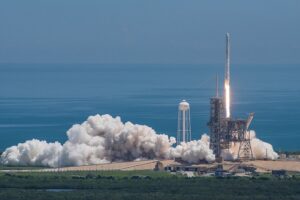
Description
An Aerospace Engineer designs, develops, tests, and oversees the production of aircraft, spacecraft, satellites, and related systems. They apply advanced principles of physics, aerodynamics, and materials science to ensure that aerospace vehicles operate safely, efficiently, and reliably. Aerospace Engineers work across a range of fields including aviation, defense, space exploration, and emerging technologies such as drones and sustainable propulsion systems. Their work drives innovation in flight and space travel, contributing to advancements in global transportation and scientific research.
Duties
The main duties of an Aerospace Engineer include:
- Designing and analyzing components such as wings, fuselages, propulsion systems, and control mechanisms.
- Conducting aerodynamic, structural, and thermal analyses to ensure performance and safety.
- Using computer-aided design (CAD) and computational fluid dynamics (CFD) software to model and simulate designs.
- Overseeing prototype testing, including wind tunnel and flight tests, and interpreting results to improve designs.
- Collaborating with multidisciplinary teams of engineers, scientists, and technicians on complex aerospace projects.
- Managing manufacturing processes, quality control, and compliance with industry and safety standards.
- Investigating failures, performing root-cause analyses, and developing corrective actions.
- Integrating new technologies such as composite materials, automation, and sustainable propulsion systems.
- Ensuring compliance with regulations set by authorities such as NASA, EASA, or the FAA.
- Preparing technical documentation, project reports, and design specifications.
Other titles
The following job titles also refer to aerospace engineer:
aeronautical engineer
aerospace engineering expert
aerospace project engineer
missile design specialist
aerospace development engineer
missile designer
aerostructure engineer
aerospace test engineer
aerospace engineering consultant
aerostructures engineer
astronautical engineer
spacecraft engineer
aerospace design engineer
aerospace weapons engineer
aerospace engineering specialist
avionics engineer
missile design expert
aerospace engineering adviser
aerospace engineers
Working conditions
Aerospace Engineers typically work in offices, laboratories, or production facilities. They may spend time in testing centers or airfields to oversee experiments and flight operations. The job involves extensive use of computer modeling, simulations, and data analysis tools. Standard working hours are common, though extended hours may be necessary during design verification, prototype testing, or launch operations. The work demands precision, teamwork, and adherence to strict safety and quality standards.
Minimum qualifications
A bachelor’s degree in aerospace engineering, aeronautical engineering, or a related field is required. Strong knowledge of fluid mechanics, propulsion, materials science, and control systems is essential. Hands-on experience through internships or cooperative education programs with aerospace companies or research organizations is highly valuable. Proficiency with engineering software such as CATIA, MATLAB, ANSYS, or SolidWorks is advantageous. Advanced degrees may be required for research, design leadership, or academic roles. Professional certification or registration, such as Professional Engineer (PE) or Chartered Engineer (CEng), enhances career prospects. Key qualities for success include analytical thinking, innovation, teamwork, and attention to detail.
ISCO skill level
ISCO skill level is defined as a function of the complexity and range of tasks and duties to be performed in an occupation. It is measured on a scale from 1 to 4, with 1 the lowest level and 4 the highest, by considering:
- the nature of the work performed in an occupation in relation to the characteristic tasks and duties
- the level of formal education required for competent performance of the tasks and duties involved and
- the amount of informal on-the-job training and/or previous experience in a related occupation required for competent performance of these tasks and duties.
Aerospace engineer is a Skill level 4 occupation.
Potential next steps
Essential knowledge and skills
Essential knowledge
This knowledge should be acquired through learning to fulfill the role of aerospace engineer.
- Production processes: Materials and techniques required in the production and distribution processes.
- Engineering principles: The engineering elements like functionality, replicability, and costs in relation to the design and how they are applied in the completion of engineering projects.
- Manufacturing processes: The steps required through which a material is transformed into a product, its development and full-scale manufacturing.
- Aircraft mechanics: Technicalities over mechanics in aircrafts and related topics in order to perform a wide range of repairs in aircrafts.
- Technical drawings: Drawing software and the various symbols, perspectives, units of measurement, notation systems, visual styles and page layouts used in technical drawings.
- Aerospace engineering: The engineering discipline that combines various technologies and engineering disciplines such as avionics, materials science and aerodynamics in order to design, develop and manufacture aircraft, spacecraft, missiles and satellites.
- Engineering processes: The systematic approach to the development and maintenance of engineering systems.
- Quality standards: The national and international requirements, specifications and guidelines to ensure that products, services and processes are of good quality and fit for purpose.
- Industrial engineering: The field of engineering concerned with the development, improvement, and implementation of complex processes and systems of knowledge, people, equipment, etc.
Essential skills and competences
These skills are necessary for the role of aerospace engineer.
- Troubleshoot: Identify operating problems, decide what to do about it and report accordingly.
- Adjust engineering designs: Adjust designs of products or parts of products so that they meet requirements.
- Perform scientific research: Gain, correct or improve knowledge about phenomena by using scientific methods and techniques, based on empirical or measurable observations.
- Use technical drawing software: Create technical designs and technical drawings using specialised software.
- Ensure aircraft compliance with regulation: Ensure that every aircraft complies with applicable regulation and all components and equipment have officially valid components.
- Execute feasibility study: Perform the evaluation and assessment of the potential of a project, plan, proposition or new idea. Realise a standardised study which is based on extensive investigation and research to support the process of decision-making.
- Assess financial viability: Revise and analyse financial information and requirements of projects such as their budget appraisal, expected turnover, and risk assessment for determining the benefits and costs of the project. Assess if the agreement or project will redeem its investment, and whether the potential profit is worth the financial risk.
- Approve engineering design: Give consent to the finished engineering design to go over to the actual manufacturing and assembly of the product.
Optional knowledge and skills
Optional knowledge
This knowledge is sometimes, but not always, required for the role of aerospace engineer. However, mastering this knowledge allows you to have more opportunities for career development.
- Materials science: Field of science and engineering that researches new materials on the basis of their structure, properties, synthesis, and performance for a variety of purposes, including increasing fire resistance of construction materials.
- Material mechanics: The behaviour of solid objects when subjected to stresses and strains, and the methods to calculate these stresses and strains.
- Design principles: The elements used in design such as unity, scale, proportion, balance, symmetry, space, form, texture, colour, light, shade and congruence and their application into practice.
- Stealth technology: The techniques used to make aircraft, ships, missiles and satellites less detectable to radars and sonars. This includes the design of particular shapes and the development of radar-absorbent material.
- Aerodynamics: The scientific field that deals with the way gases interact with moving bodies. As we usually deal with atmospheric air, aerodynamics is primarily concerned with the forces of drag and lift, which are caused by air passing over and around solid bodies.
- CAE software: The software to perform computer-aided engineering (CAE) analysis tasks such as Finite Element Analysis and Computional Fluid Dynamics.
- Fluid mechanics: The characteristics and properties of fluids, including gases, liquids and plasmas, at rest and in motion, and the forces on them.
- Mechanical engineering: Discipline that applies principles of physics, engineering and materials science to design, analyse, manufacture and maintain mechanical systems.
- Unmanned air systems: The systems used to remotely control unmanned aerial vehicles by onboard computers or by a pilot on the ground or in the air.
- Guidance, navigation and control: The engineering discipline that deals with the design and development of systems that can control the motion of automobiles, ships, space- and aircraft. It includes control over vehicle’s trajectory from its present location to a designated target and vehicle’s speed and altitude.
- Defense system: The various weapons and weapon systems used to protect citizens and to harm or shield incoming enemies and enemy weapons.
- Synthetic natural environment: The simulation and representation of components of physical world such as climate, wheather and space where military systems exist in order to obtain information and perform tests.
Optional skills and competences
These skills and competences are sometimes, but not always, required for the role of aerospace engineer. However, mastering these skills and competences allows you to have more opportunities for career development.
- Record test data: Record data which has been identified specifically during preceding tests in order to verify that outputs of the test produce specific results or to review the reaction of the subject under exceptional or unusual input.
- Apply advanced manufacturing: Improve production rates, efficiencies, yields, costs, and changeovers of products and processes by using relevant advanced, innovative, and cutting edge technology.
- Create a product’s virtual model: Create a mathematical or three-dimensional computer graphic model of the product by using a CAE system or a calculator.
- Oversee assembly operations: Give technical instructions to assembly workers and control their progress to ensure compliance with quality standards and to check that the goals set in the production plan are met.
- Build a product’s physical model: Build a model of the product out of wood, clay or other materials by using hand or electrical tools.
- Use CAM software: Use computer-aided manufacturing (CAM) programmes to control machinery and machine tools in the creation, modification, analysis, or optimisation as part of the manufacturing processes of workpieces.
- Draft design specifications: List the design specifications such as materials and parts to be used and a cost estimate.
- Use CAD software: Use computer-aided design (CAD) systems to assist in the creation, modification, analysis, or optimisation of a design.
- Manage product testing: Oversee the testing procedures to ensure that the end-product complies with the quality and safety requirements.
- Design prototypes: Design prototypes of products or components of products by applying design and engineering principles.
- Conduct performance tests: Conduct experimental, environmental and operational tests on models, prototypes or on the systems and equipment itself in order to test their strength and capabilities under normal and extreme conditions.
- Plan test flights: Draft the test plan by describing manoeuvre-by-manoeuvre for each test flight in order to measure take-off distances, rate of climb, stall speeds, manoeuvrability and landing capacities.
- Develop test procedures: Develop testing protocols to enable a variety of analyses of products, systems, and components.
- Analyse production processes for improvement: Analyse production processes leading toward improvement. Analyse in order to reduce production losses and overall manufacturing costs.
- Control production: Plan, coordinate, and direct all production activities to insure the goods are made on time, in correct order, of adequate quality and composition, starting from intake goods up to shipping.
Skills group distribution
ISCO group and title
2144 – Mechanical engineers
References
- Aerospace engineer – ESCO
- Featured image: Image by Military_Material from Pixabay


